
Yellow teeth are one of the most common dental concerns among both teens and adults. It affects confidence, first impressions, and the way we feel about our smile. While white teeth are often seen as a sign of beauty and good health, discoloration can sneak up due to daily habits, aging, or even genetics. If you’ve ever wondered “Why Are My Teeth Yellow?”, the reality is that it’s usually a mix of lifestyle choices and changes happening inside the tooth over time. Many people begin their smile transformation by asking What Causes Teeth to Be Yellow?, because understanding the root cause helps prevent issues early.
What Causes Yellow Teeth in Adults?
Learning What Causes Teeth to Be Yellow? isn’t just about surface stains. For many adults, it’s a combination of lifestyle, health, and natural biological changes. Knowing the root problem helps prevent further discoloration.
Common Causes of Yellow Teeth in Adults
Here’s a deeper look at the Causes of Yellow Teeth in Adult life:
- Poor Oral Hygiene Skipping brushing or flossing allows plaque and tartar to build up, creating a yellow, dull appearance over time.
- Genetics Some people naturally have thinner enamel. When enamel is thin, the yellowish dentin underneath shows more clearly one major reason: What Causes Teeth to Be Yellow? varies from person to person.
- Aging & Dentin Exposure As we age, enamel wears down and the yellow dentin inside becomes more visible, making teeth appear darker even with good maintenance.
- Medications Certain antibiotics, antihistamines and blood pressure treatments may cause internal discoloration.
- Smoking & Vaping Nicotine and tobacco products leave stubborn stains that settle deep into enamel.
- Pigmented Foods & Drinks Coffee, tea, wine, cola, berries, soy sauce, and curry all contain pigments that slowly tint enamel.
If you’ve ever thought, “Why Are My Teeth Yellow?” Even when you brush regularly, the answer could be a combination of these factors. These lifestyle and biological influences are also recognized globally as Causes of Yellow Teeth in Adult, giving clarity on how discoloration develops.
Why Do Teeth Turn Yellow?
For many people, understanding why teeth turn yellow begins with everyday habits but natural biology plays a big role too. Most discoloration develops slowly, which is why it becomes more noticeable over time. If you’ve ever caught yourself wondering, “Why Are My Teeth Yellow?”, the answer might not be as simple as you think. Let’s look at what really happens behind the scenes:
- Enamel Wear: The enamel on the outside of the tooth works like a protective shield. As it wears down with age or grinding, the yellow dentin inside starts to show through. Even people with excellent dental hygiene experience this, making it one of the most natural reasons for discoloration.
- Dietary Choices: Coffee, tea, wine, curries, and dark-colored drinks are among the most common foods that stain teeth. Their pigments settle into enamel pores over the years and gradually turn teeth yellow.
- Lifestyle Factors: Smoking, vaping, and poor dental care dramatically accelerate staining. These habits combine surface stains with deeper enamel damage, making yellowing more intense and long-lasting.
- Internal Factors: Genetics and certain medications can affect tooth color from within. In these cases, discoloration isn’t caused by lifestyle choices, it’s biological, which makes prevention more challenging without professional treatment.
- Hidden Culprits: Even healthy foods like berries, beetroot, or tomato-based sauces contain strong pigments that add up over time. They may not seem harmful, but they can silently contribute to noticeable staining.
When people understand What Causes Teeth to Be Yellow?, they gain control over habits and routines that protect their smile long term.
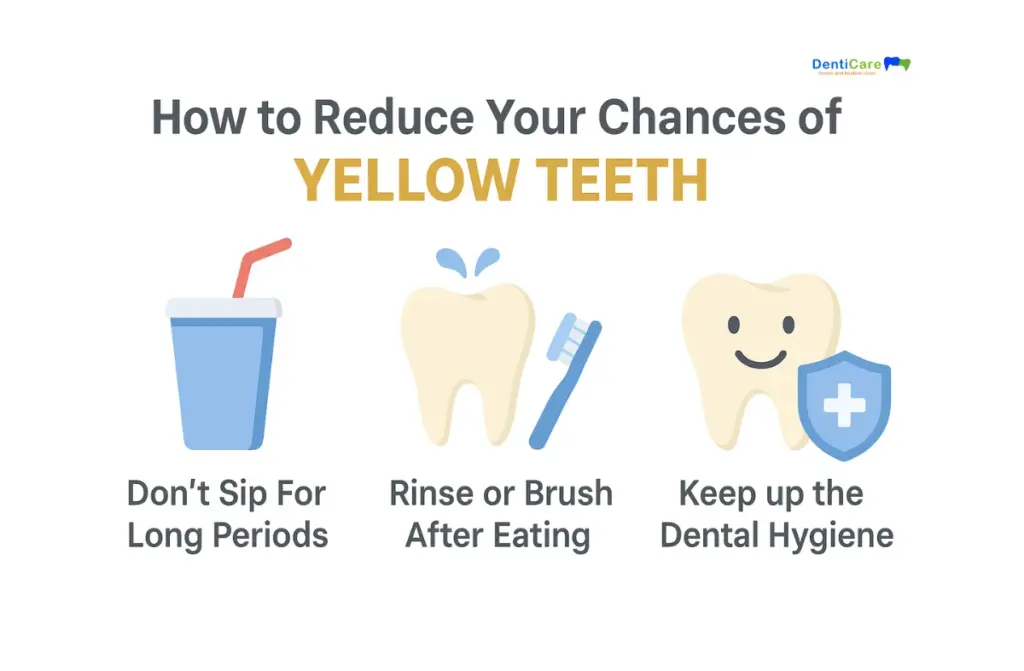
How to Reduce Your Chances of Yellow Teeth
Even though what causes teeth to be yellow can’t always be avoided, small lifestyle shifts can make a big difference. By understanding the common reasons for yellow teeth, you can adopt habits that slow discoloration and protect your smile.
- Don’t Sip For Long Periods: Nursing drinks like coffee, tea, or soda throughout the day increases exposure to pigments. This constant contact is one of the top reasons for yellow teeth. Instead, drink in shorter intervals and use a straw to reduce staining from foods that stain teeth.
- Rinse or Brush After Eating: Pigmented meals and snacks often explain why teeth turn yellow. Rinsing with water or brushing after eating helps wash away residue before it settles. This habit is especially useful if your diet includes common foods that stain teeth, such as red wine or curries.
- Keep Up the Dental Hygiene: Plaque buildup is a key factor in what causes teeth to be yellow. Brushing twice daily, flossing, and regular cleanings prevent staining and protect enamel. Good habits directly counter why teeth turn yellow, keeping your smile brighter for longer.
Teeth Whitening Methods
While prevention is important, knowing how to reverse discoloration matters too. Many adults search for solutions once they notice what causes teeth to be yellow showing up in their smiles. The right method depends on lifestyle, sensitivity, and budget, but each approach targets the underlying reasons for yellow teeth differently.
- Professional In-Office Teeth Whitening: Dentists use stronger bleaching agents for instant results. This option is ideal when deep stains or enamel wear have contributed to why teeth turn yellow and need a more intensive fix.
- At-Home Teeth Whitening Kits: Custom trays or LED kits provide effective whitening over time. These are a great option for those whose discoloration is mainly due to lifestyle-based reasons for yellow teeth like coffee or smoking.
- Lifestyle Changes: Avoiding smoking and cutting back on pigmented drinks helps reduce what causes teeth to be yellow in the first place. Small changes limit exposure to foods that stain teeth, slowing down future discoloration.
- Cosmetic Dentistry Procedures: Options like veneers or bonding are often chosen when whitening alone can’t fix deep discoloration. These cosmetic solutions go beyond appearance they address stubborn cases of why teeth turn yellow that can’t be corrected with surface treatments.
How to Fix Yellow Teeth
When discoloration sets in, many people look for reliable ways to restore brightness. Fixing stains starts with understanding what causes teeth to be yellow in the first place. Once you know the root problem, you can choose solutions that address both appearance and long-term health.
- Dental Scaling: Professional dental scaling helps remove plaque, tartar, and surface stains that regular brushing cannot eliminate. It is especially helpful for people whose teeth have turned yellow due to accumulated calculus, smoking, or frequent consumption of staining foods and drinks like coffee, tea, and wine. Scaling is often the first recommended step when discoloration is mild to moderate.
- Teeth Whitening Treatments: Professional whitening or at-home kits can dramatically improve your smile. These options directly tackle the deeper reasons for yellow teeth, reversing discoloration linked to age or enamel thinning. This is one of the most common tooth discoloration treatment choices because results are fast and noticeable.
- Dental Veneers: For stubborn or permanent stains, veneers provide a cosmetic cover-up that looks natural. This option is often chosen when reasons for yellow teeth include genetics or medication side effects. Since veneers mask discoloration from foods that stain teeth, they deliver an instantly brighter smile for patients who need a long-term fix.
Patients with deep or recurring stains may also benefit from an advanced tooth discoloration treatment plan supervised by a dentist for long-term results.
Should You Seek Professional Help to Reduce Tooth Discoloration?
Not all discoloration can be solved at home. Sometimes, the best option is turning to a dentist who can identify what causes teeth to be yellow in your specific case. Professional care not only improves aesthetics but also addresses underlying issues like enamel loss or gum health.
- When Home Care Isn’t Enough: If brushing, lifestyle changes, and whitening products don’t work, it may point to deeper reasons for yellow teeth. Dentists can determine why teeth turn yellow beyond surface stains, ensuring treatment targets the real problem.
- Personalized Treatment Plans: A dental check-up can reveal whether genetics, medications, or lifestyle habits are at fault. By pinpointing what causes teeth to be yellow, dentists can recommend targeted treatments such as scaling, polishing, or professional whitening.
- Preventing Future Stains: Professionals also guide you on avoiding foods that stain teeth and recommend alternatives. These insights help patients not only correct discoloration but also reduce future reasons for yellow teeth, ensuring a lasting bright smile.
Conclusion
A bright smile isn’t just about appearance it boosts confidence and reflects overall oral health. Understanding What Causes Teeth to Be Yellow? gives you the power to take control of both prevention and treatment. Whether it’s lifestyle habits, natural aging, or genetics, every factor influences how your teeth change over time. By recognizing the specific reason for discoloration in your case and choosing the right solution, you can restore your smile and keep it glowing for the long run. Don’t wait to start today and take the first step toward a healthier, brighter smile.