

When it comes to improving your smile, two of the most common choices are veneers vs crowns. Both are designed to restore the look and function of teeth, but they work in different ways. Veneers are ultra-thin shells that cover the front surface of a tooth, often chosen for cosmetic touch-ups like chips, stains, or minor misalignment. Crowns, on the other hand, fully cap the tooth, offering both protection and aesthetic appeal. Understanding the differences between the two can help you choose the right solution for your smile.
What is a Dental Crown?
A dental crown is essentially a protective “cap” placed over a damaged or weakened tooth. In the conversation of veneers vs crowns, crowns go beyond just improving appearance they also restore strength and function. Crowns are widely used for teeth that have large cavities, cracks, or after root canal treatment.
- Full Coverage Protection: Unlike veneers, which only cover the front, a crown completely encases the entire tooth. This makes it ideal for patients with teeth that are structurally compromised or heavily worn down.
- Durability for Daily Use: Crowns are crafted from strong materials like porcelain, zirconia, or metal alloys. This durability ensures the tooth can handle chewing pressure, making it a reliable choice for molars and teeth under heavy bite force.
- Blend of Function and Aesthetics: While crowns provide strength, they’re also designed to look natural. Modern crowns are shaded to match surrounding teeth, giving patients both cosmetic improvement and functional support.
- Ideal for Restored Teeth: For individuals who’ve had prior dental treatments such as fillings or root canals a crown helps preserve the tooth long-term while maintaining a natural smile. In comparing veneers and crowns, crowns often win when the primary concern is tooth strength.
- Long-Term Investment in Oral Health: Crowns not only restore appearance but also prevent further damage. By shielding weakened teeth, they reduce the risk of fractures or tooth loss, offering both cosmetic and functional benefits.
What is a Dental Veneer?
A dental veneer is a thin, custom-made shell that bonds to the front surface of your tooth. In the comparison of veneers vs crowns, veneers lean more toward enhancing appearance rather than rebuilding a tooth’s full structure. They’re often chosen for cosmetic improvements like discoloration, chips, or slightly uneven teeth.
- Minimal Tooth Alteration: Veneers require only a small amount of enamel removal compared to crowns. This makes them less invasive, while still delivering a noticeable transformation in your smile.
- Perfect for Cosmetic Enhancements: Whether it’s stained teeth that don’t respond to whitening or minor alignment issues, veneers are a go-to solution. In the world of veneers and crowns, veneers are primarily for aesthetics.
- Natural-Looking Results: Veneers are crafted from porcelain or composite resin, materials that mimic the natural translucency of enamel. This ensures they blend seamlessly with surrounding teeth, giving you a bright yet natural look.
- Durability with Care: Though thinner than crowns, veneers are durable when well-maintained. They can last for years, making them a strong option for patients focused on cosmetic results.
- Best for Front Teeth: Because veneers cover only the front surface, they’re ideal for front teeth that show most when you smile. Patients who want a “Hollywood smile makeover” often choose veneers as part of their treatment plan.
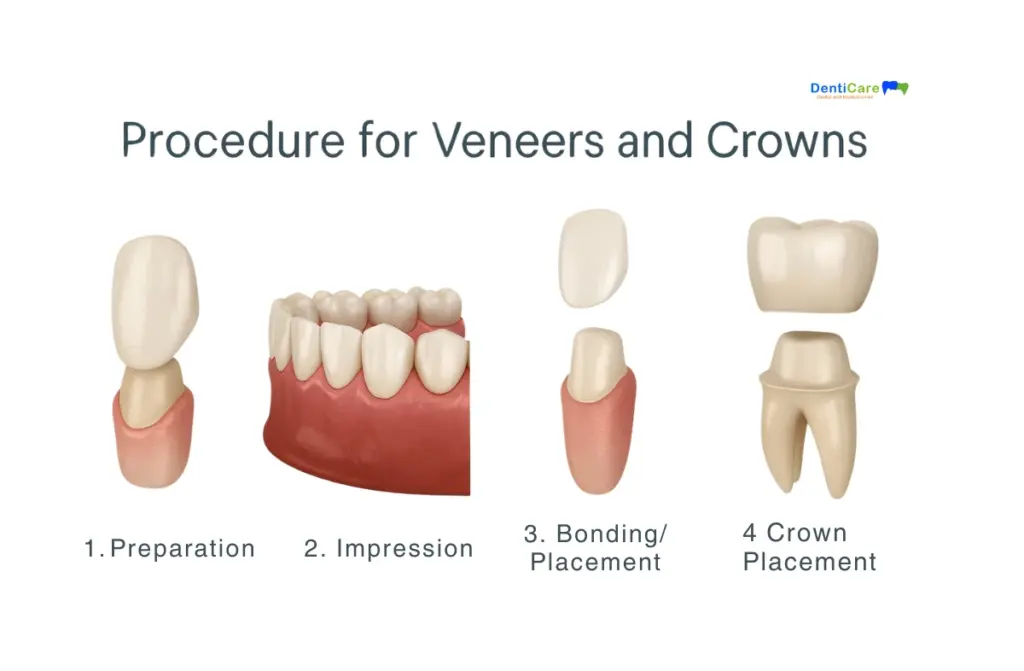
Procedure for Veneers and Crowns
When patients explore Veneers vs Crowns, one of the most common questions is how each procedure is performed. Both require professional expertise, but the steps differ significantly depending on whether you’re getting veneers or crowns. Understanding the difference between veneers and crowns helps set expectations clearly before treatment begins.
- Initial Consultation and Planning: The process starts with a detailed evaluation of your teeth. Your dentist will discuss cosmetic goals, oral health status, and whether veneers or crowns are the better option. This stage often involves X-rays and impressions, giving you clarity on which is better a crown or a veneer for your situation.
- Tooth Preparation: For veneers, only a thin layer of enamel is removed from the front of the tooth. Crowns require reshaping the entire tooth to create space for full coverage. This step highlights the difference between veneers and crowns, as one is minimally invasive while the other involves more preparation.
- Temporary Phase: After tooth preparation, temporary restorations may be placed. This ensures the tooth remains functional and protected while your permanent veneer or crown is crafted. During this phase, patients often revisit the debate of Veneers vs Crowns, considering both comfort and appearance.
- Lab Fabrication: Both veneers and crowns are custom-designed in a dental lab to match color, shape, and bite. The precise fit is critical, as ill-fitting restorations can impact oral health. The time taken here also influences perceptions of crown vs veneer cost, since quality craftsmanship adds to long-term value.
- Final Placement: Once ready, the veneer or crown is bonded permanently to the tooth. Veneers are cemented to the front surface, while crowns completely cover the tooth structure. At this stage, the difference between veneers and crowns becomes clear in both appearance and function. Patients often conclude that which is better a crown or a veneer depends on whether they needed cosmetic improvement or structural reinforcement.
- Follow-Up and Maintenance: After placement, your dentist checks bite alignment and offers aftercare instructions. Proper hygiene and routine dental visits ensure veneers and crowns last for years. The crown vs veneer cost is best justified by their durability, but patient lifestyle and oral habits strongly affect longevity.
In short, the step-by-step process of veneers and crowns reveals why the choice is personal. The Veneers vs Crowns decision isn’t just about looks it’s about balancing health, strength, and budget. Knowing the difference between veneers and crowns helps patients weigh cosmetic goals against function, while considering which is better a crown or a veneer for long-term care and evaluating the realistic crown vs veneer cost before making a final decision.
The Process: What Can You Expect?
When patients compare Veneers vs Crowns, the experience during treatment matters just as much as the results. Knowing what happens from start to finish can ease anxiety and help you feel confident about your decision. The difference between veneers and crowns becomes especially clear when we look at comfort, healing time, and results.
- Numbing and Comfort: Most procedures involve local anesthesia to ensure you’re comfortable. Veneers usually require less numbing since only the enamel surface is shaped, while crowns may need deeper preparation. For many patients debating which is better a crown or a veneer, comfort during the procedure becomes a deciding factor.
- Treatment Duration: Veneers can often be completed in fewer appointments because they need less structural work. Crowns, however, usually take a bit longer due to the extensive reshaping and the possibility of temporary crowns. This shows one more difference between veneers and crowns that patients consider before choosing.
- Appearance During the Process: Temporary veneers or crowns may be placed to protect teeth while the permanent version is being made. These give you a preview of your new smile. In the discussion of veneers and crowns, many patients appreciate seeing how subtle or dramatic the change will be.
- Adjustment and Fitting: Once your permanent veneers or crowns arrive, your dentist will test the fit, shade, and bite. Minor adjustments may be done before bonding. This part of the process highlights how veneers and crowns are tailored individually, reinforcing the uniqueness of every smile.
- Post-Treatment Sensitivity: It’s common to feel mild sensitivity after placement, especially with crowns since more of the tooth is involved. Veneers typically have a shorter adjustment period. Patients often reflect on which is better a crown or a veneer not just in terms of looks but also based on how their teeth feel afterward.
- Longevity Aftercare: Both veneers and crowns require consistent brushing, flossing, and check-ups. With the right care, they can last many years. Comparing Veneers vs Crowns, the decision isn’t just about durability but about maintaining oral health over the long term. The difference between veneers and crowns comes down to lifestyle, expectations, and overall treatment goals.
In the end, the process of veneers and crowns is highly personalized. By understanding each stage, patients can better weigh which is better a crown or a veneer for their needs and fully appreciate the practical difference between veneers and crowns during treatment.
How Do You Know Which One is Right for You?
Deciding between Veneers vs Crowns isn’t just about looks it’s about what your teeth truly need. For some, veneers are the ideal cosmetic solution, while for others, crowns are essential for protecting weakened teeth. The difference between veneers and crowns becomes clear when you think about your long-term goals.
- Cosmetic vs. Functional Goals: If your main priority is correcting stains, chips, or minor alignment, veneers may be the right choice. But if your tooth is cracked, heavily decayed, or treated with a root canal, a crown offers more complete protection. This highlights the real difference between veneers and crowns in practice.
- Durability and Longevity: Crowns are often stronger, making them better for back teeth that endure more bite pressure. Veneers excel in enhancing front teeth for a flawless smile. When patients ask, which is better a crown or a veneer, the answer depends on balancing strength with aesthetics.
- Budget and Value: Veneers may cost less upfront when fewer teeth are treated, but crowns can be a better investment when structural support is needed. The crown vs veneer cost varies, but both options add value when chosen wisely. Patients often revisit the question which is better a crown or a veneer with both dental health and cost in mind.
- Personal Smile Goals: Some patients want a Hollywood-style smile makeover, while others simply want to restore a single damaged tooth. The decision between Veneers vs Crowns often comes down to lifestyle, expectations, and dental history.
Conclusion
When it comes to choosing between Veneers vs Crowns, the right option depends on your needs, goals, and long-term dental health. Understanding the difference between veneers and crowns is key veneers shine in cosmetic makeovers, while crowns provide strength and durability. Many patients wonder, which is better a crown or a veneer, but the answer varies based on tooth condition and lifestyle. Considering the crown vs veneer cost, the best choice is the one that delivers both confidence and lasting value for your smile.